Car seats go through a lot of wear and tear, from spilled drinks to dirt tracked in daily. Learning how to clean car upholstery safely helps preserve both appearance and comfort for the long haul. Car upholstery and auto upholstery require methods that respect different materials like leather, vinyl, and cloth, so a one-size-fits-all approach does not work. The following guidance explores safe cleaning solutions, proven techniques, and practical steps to restore freshness without causing damage.
Cleaning Car Upholstery Safely
People often find themselves dealing with stains after kids snack in the backseat or pets leave marks behind. One driver recalled using a harsh cleaner that ended up discoloring the seat fabric, showing how using the wrong product can make things worse. Experience shows that safe methods not only protect the fabric but also extend the life of the seats. This is why understanding materials before scrubbing is always worth the effort.
- Wrong products can discolor fabrics
- Safe cleaning methods protect seat life
- Experience highlights the value of caution
Understanding Car Upholstery Materials
Different seat materials require different approaches because leather, cloth, and vinyl all react uniquely to cleaners. The U.S. Consumer Product Safety Commission notes that improper cleaning agents can release harmful chemicals or damage surfaces. Auto upholstery in newer vehicles often uses blends that trap stains easily, making safe cleaning practices even more important. Knowing what material you’re working with sets the foundation for the right cleaning method.
- Leather, cloth, and vinyl need specific care
- Improper cleaners may release harmful chemicals
- Blended fabrics trap stains quickly
Preparing Car Upholstery for Cleaning
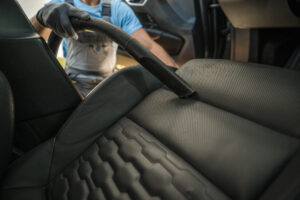
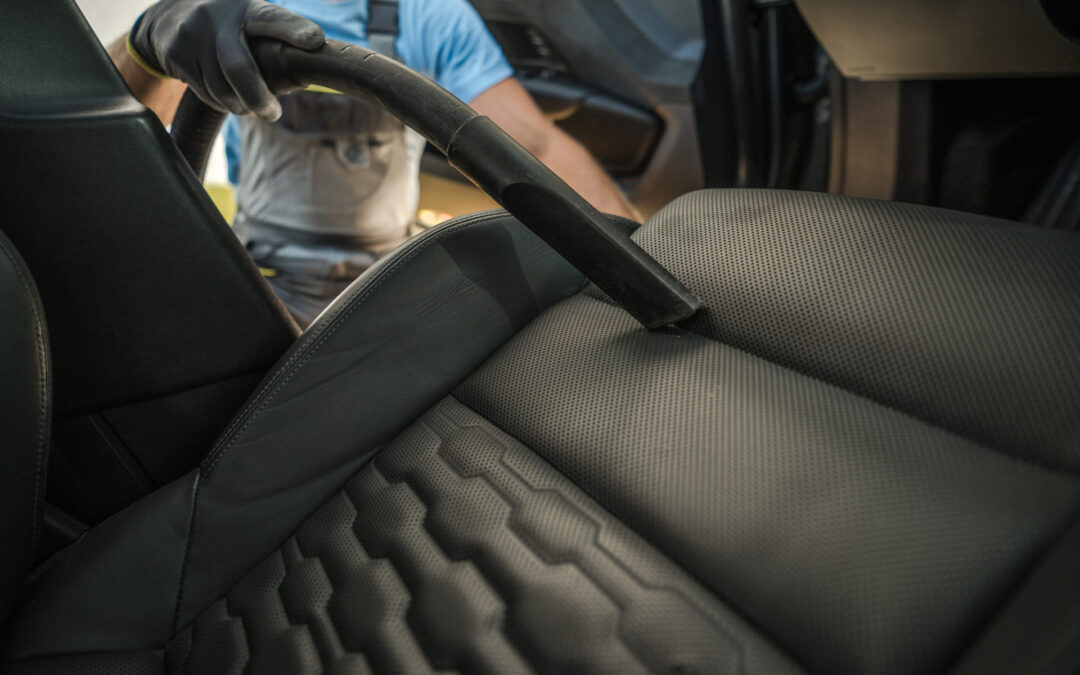
Preparation makes cleaning more effective. Loose dirt and crumbs should be removed with a vacuum before applying any cleaner. The National Institute of Health advises that testing cleaning agents on a hidden area reduces the risk of discoloration. Skipping preparation often leads to rubbing grit deeper into the fabric, which can wear down the material over time.
- Vacuum seats before cleaning
- Test products on hidden spots
- Preparation prevents unnecessary damage
Safe Cleaning Solutions for Auto Upholstery
Homemade options like mild dish soap diluted with water can be effective on cloth upholstery without harming fibers. Commercial cleaners approved for automotive use are designed to handle both stains and odors safely. Natural choices like vinegar solutions provide a gentler alternative, though they should be used carefully to avoid lingering smells. Each solution should be applied lightly with a cloth rather than soaked into the seats.
- Homemade mixes are safe for fabrics
- Commercial cleaners target stains effectively
- Natural cleaners protect surfaces gently
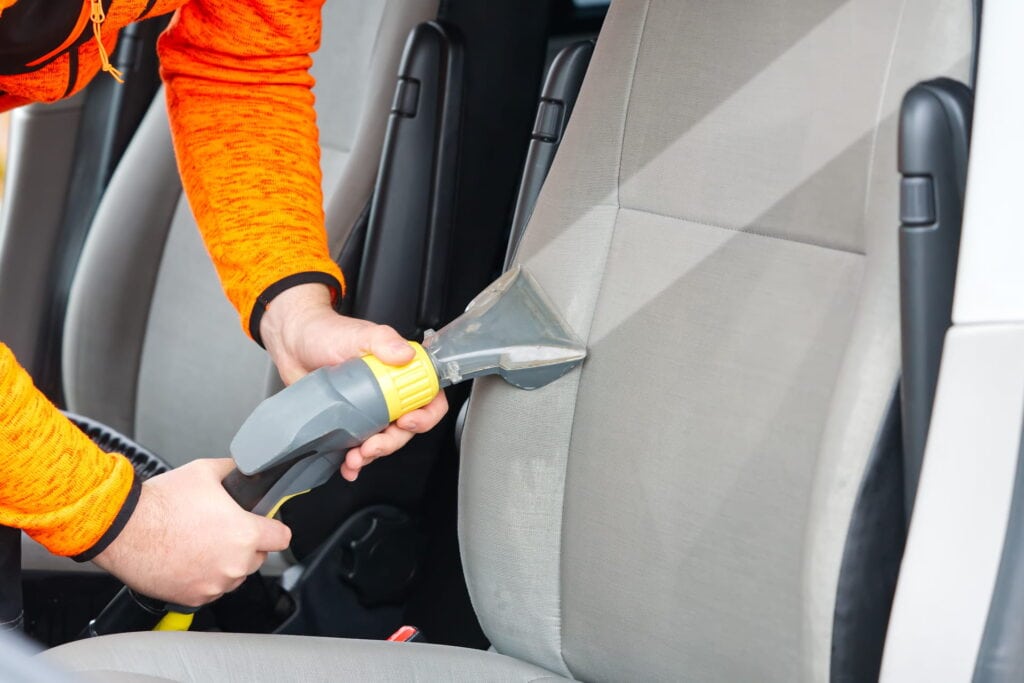
Deep Cleaning Fabric Car Upholstery
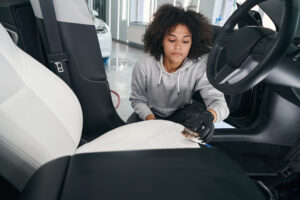
Cloth seats absorb spills quickly, so a step-by-step approach is best. Start by blotting stains rather than rubbing them, then apply a safe cleaning solution with a soft brush. According to the Environmental Protection Agency, proper drying after cleaning reduces mold growth, which can affect air quality inside the vehicle. Allowing fabric to dry fully in a ventilated space is just as important as removing the stain itself.
- Blot instead of rubbing stains
- Use brushes for deeper cleaning
- Proper drying prevents mold growth
Cleaning Leather Auto Upholstery
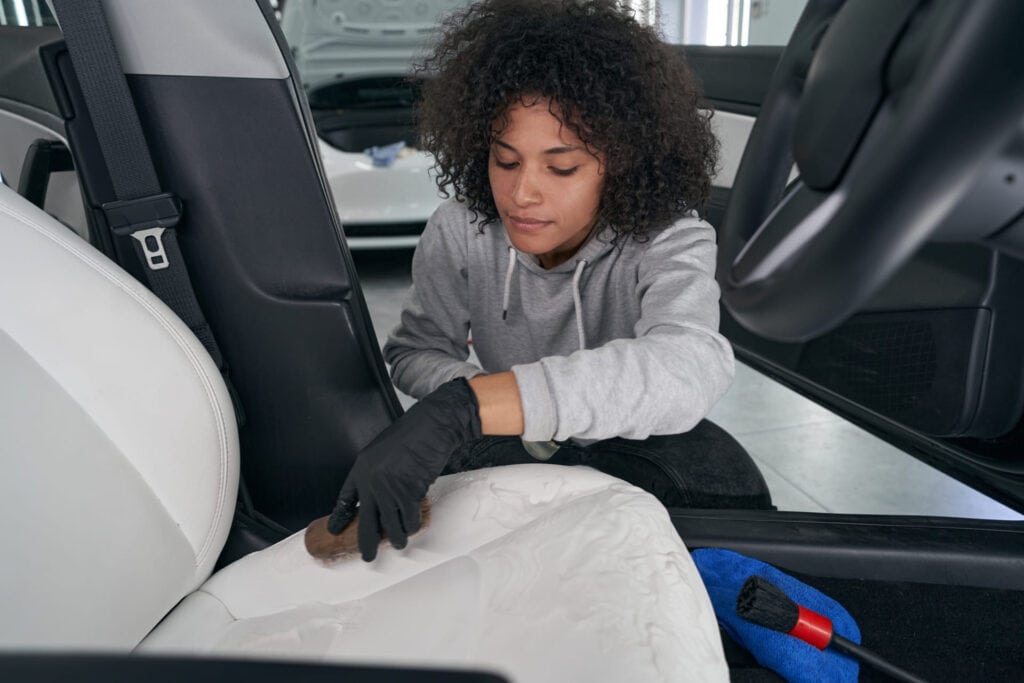
Leather needs special attention because it can dry out and crack if not treated properly. A pH-balanced leather cleaner removes dirt while preserving the natural oils. The U.S. Department of Agriculture highlights how conditioning agents restore flexibility in natural materials, which applies directly to leather seats. Cleaning should be followed by conditioning to prevent long-term damage and fading.
- Leather requires pH-balanced cleaners
- Conditioning prevents cracks and dryness
- Cleaning should be followed by conditioning
Cleaning Vinyl Car Upholstery
Vinyl is more resistant than fabric or leather but still needs careful handling. Wiping with mild soap and water keeps the surface clean without stripping its finish. The Federal Highway Administration points out that sun exposure speeds up wear on vinyl, making regular cleaning and conditioning important. Protective treatments also help reduce fading and extend durability.
- Vinyl handles mild soap cleaning well
- Sun exposure increases fading risk
- Protective treatments extend durability
Removing Stains from Car Upholstery
Spills like coffee, gum, and ink require targeted treatments. Vinegar-based solutions can lift coffee stains, while ice helps harden gum for easier removal. The Centers for Disease Control and Prevention confirm that alcohol is effective at breaking down organic and chemical stains such as ink. Safe application methods avoid spreading stains further and ensure auto upholstery is preserved.
- Vinegar lifts coffee stains
- Ice hardens gum for removal
- Alcohol dissolves ink safely
Protecting Auto Upholstery After Cleaning
Protecting seats after cleaning makes future messes easier to handle. Fabric protectants reduce absorption, while leather and vinyl conditioners maintain flexibility and resistance. Regular vacuuming keeps dirt from becoming embedded. Studies from the National Highway Traffic Safety Administration connect clean interiors with better air quality, proving that ongoing care benefits both appearance and health.
- Fabric protectants reduce staining
- Conditioners keep leather and vinyl healthy
- Regular vacuuming prevents dirt buildup
Professional Help for Car Upholstery
Some stains and odors are too difficult to remove with household methods. Professional detailing services use advanced tools such as steam cleaners and specialized solvents that reach deeper layers. Costs may vary, but in severe cases, professional help preserves long-term value. Industry experience shows auto upholstery responds better to expert care when contamination runs deep.
- Experts handle difficult stains and odors
- Advanced tools reach deeper layers
- Professional care preserves value
Keeping Car Upholstery Safe and Fresh
Safe cleaning protects both the appearance and durability of vehicle interiors. Fabric, leather, and vinyl each need their own methods, but all benefit from regular care and the right cleaning solutions. Combining preparation, careful application, and preventive measures keeps seats in their best condition. Car upholstery and auto upholstery stay fresher longer when maintained with safe and consistent cleaning practices.
Key Takeaways on Cleaning Car Upholstery Safely
- Different upholstery materials need different cleaning methods
- Preparation like vacuuming improves cleaning results
- Homemade and commercial solutions can be safe if used correctly
- Leather and vinyl require conditioning after cleaning
- Preventive protection extends the life of car upholstery
Frequently Asked Questions about Cleaning Car Upholstery
What is the safest everyday cleaner for car upholstery?
Mild dish soap diluted with water is safe for fabric upholstery and removes everyday dirt without harming fibers.
Can leather car upholstery be cleaned with vinegar?
Vinegar is not recommended for leather because it strips natural oils, which can lead to cracking and stiffness over time.
How often should fabric seats be deep cleaned?
Fabric car upholstery should be deep cleaned every six to twelve months, depending on usage and exposure to spills or dirt.
Is steam cleaning safe for auto upholstery?
Steam cleaning is safe for most fabrics and helps sanitize seats, but it should be avoided on delicate leather surfaces.
When should professional cleaning be considered for car upholstery?
Professional services are helpful when stains persist, odors remain after cleaning, or when the material has been heavily soiled over time.