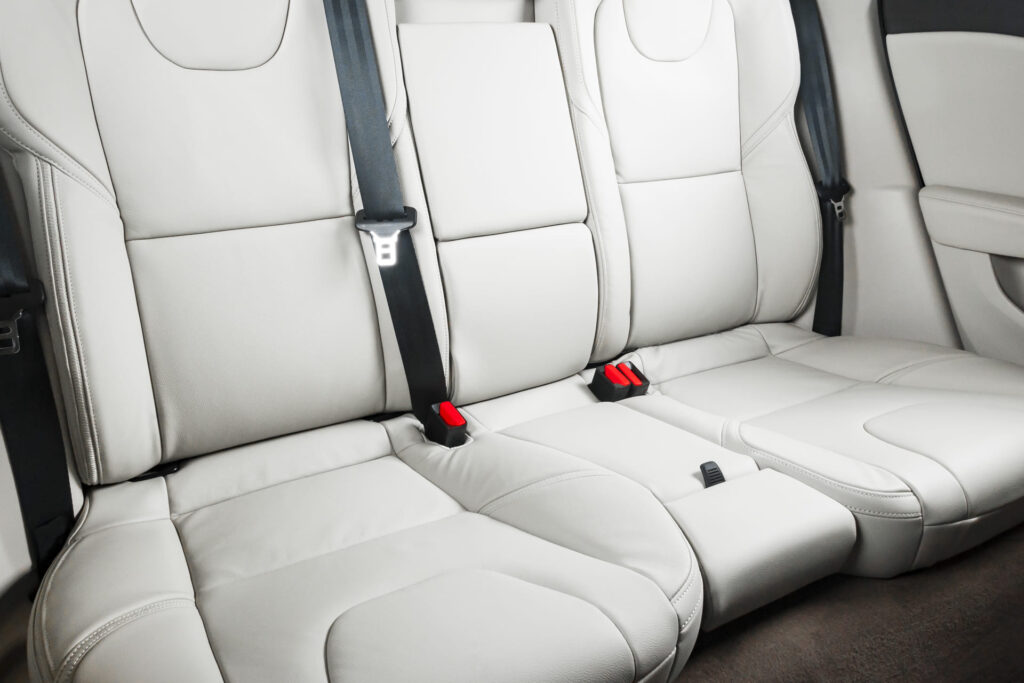
Accidents happen, and when they do inside a vehicle, cleaning becomes a top priority. Knowing how to clean urine from car upholstery can save both money and time while preventing long-term damage. Car upholstery and auto upholstery require different methods than regular household fabrics because of how deeply fluids can soak into the padding. This guide explains practical steps, proven methods, and expert-backed solutions for keeping seats fresh and odor-free.
Cleaning Urine from Auto Upholstery
Anyone who has had a pet or child knows how stressful spills and accidents can be, especially in a vehicle. Imagine a toddler’s car seat mishap leaving a stubborn odor that seems impossible to remove, only to realize the right tools and knowledge can fix it quickly. Learning how to handle urine stains in car upholstery means knowing what to do immediately and what deeper cleaning techniques actually work. Experience shows that quick action makes the biggest difference.
- Acting quickly reduces long-term staining and odor
- Simple household supplies can help in emergencies
- Experience proves deep cleaning keeps upholstery looking new
Understanding Car Upholstery Stains
Urine stains behave differently than coffee or soda because they contain proteins and uric acid crystals. According to the U.S. National Library of Medicine, these components can bond with fabrics and create odors that worsen over time. Car upholstery and auto upholstery materials such as cloth, suede, or leather absorb liquids at different rates, which is why tailored cleaning is necessary. Leaving urine untreated can also encourage bacteria growth inside the cushions.
- Urine proteins bind to fabric and padding
- Different materials absorb stains at different speeds
- Untreated stains can promote bacterial growth
Immediate Steps for Car Upholstery
Blotting should always be the first move when an accident happens. Absorbing as much liquid as possible limits how far urine seeps into the foam padding beneath the seat fabric. Avoid scrubbing because it spreads the stain deeper, making cleanup harder. The Environmental Protection Agency reports that proper cleaning practices reduce microbial contamination, which is why removing excess moisture is so important at the start.
- Blotting reduces moisture spread
- Avoid scrubbing to prevent deeper stains
- Quick response lowers odor risk
Deep Cleaning Auto Upholstery
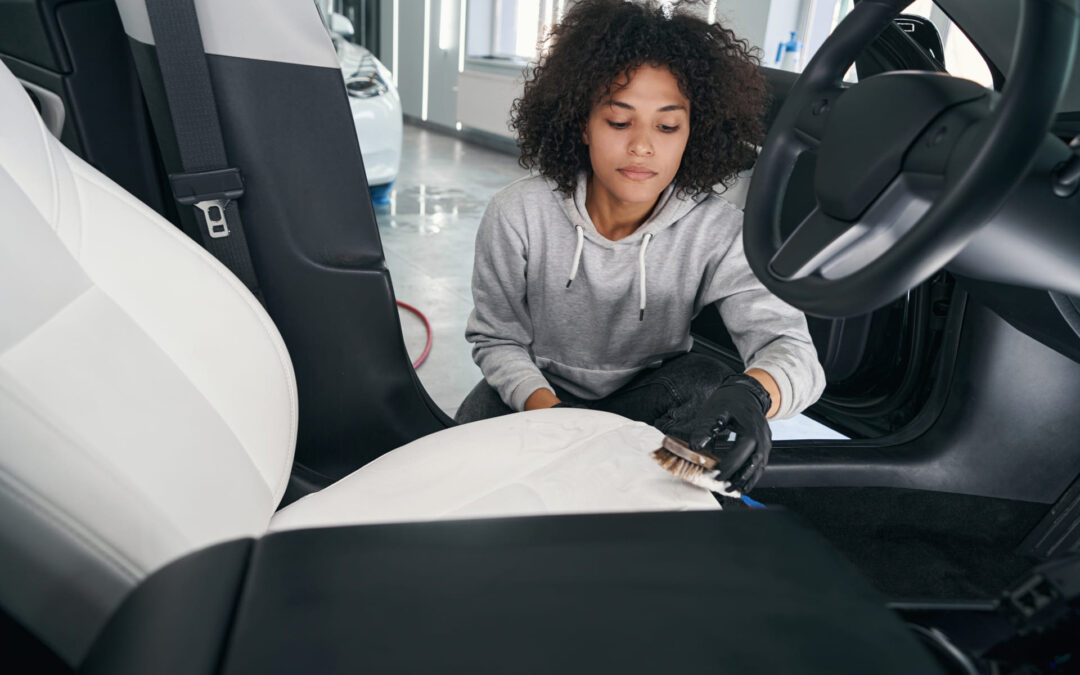
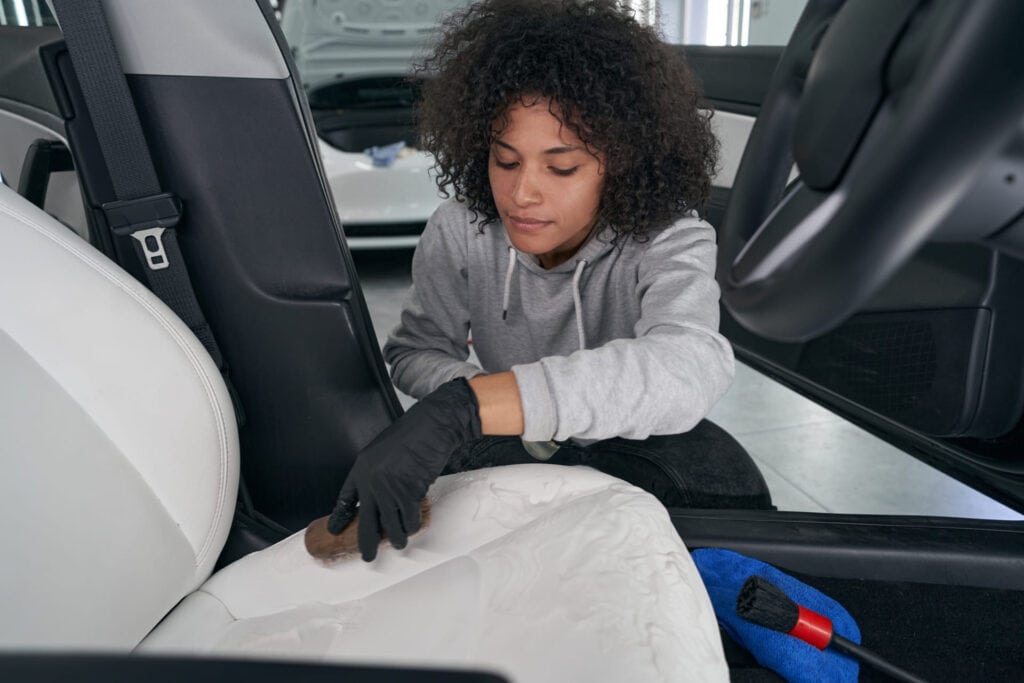
Once initial moisture is handled, deeper cleaning removes what’s left behind. Enzyme-based cleaners work because they break down the proteins in urine, leaving nothing for bacteria to feed on. According to the Centers for Disease Control and Prevention, enzymes are effective for breaking down organic matter in healthcare and sanitation, which makes them highly reliable for car upholstery too. Gentle scrubbing with a soft brush prevents damage to seat fibers while still working the solution into the fabric.
- Enzyme cleaners break down urine proteins
- CDC data supports enzyme effectiveness
- Gentle scrubbing avoids damage to fibers
Neutralizing Odor in Car Upholstery
Even after stains are treated, lingering odors can remain. Vinegar mixed with water neutralizes uric acid crystals, while baking soda absorbs smells trapped in the seat fabric. The U.S. Department of Agriculture highlights baking soda as one of the safest and most effective odor absorbers in household cleaning. For those preferring commercial options, specialized odor neutralizers designed for auto upholstery can target smells without harming fabrics.
- Vinegar neutralizes uric acid crystals
- Baking soda absorbs lingering odors
- Commercial products target smells safely
Steam Cleaning Auto Upholstery
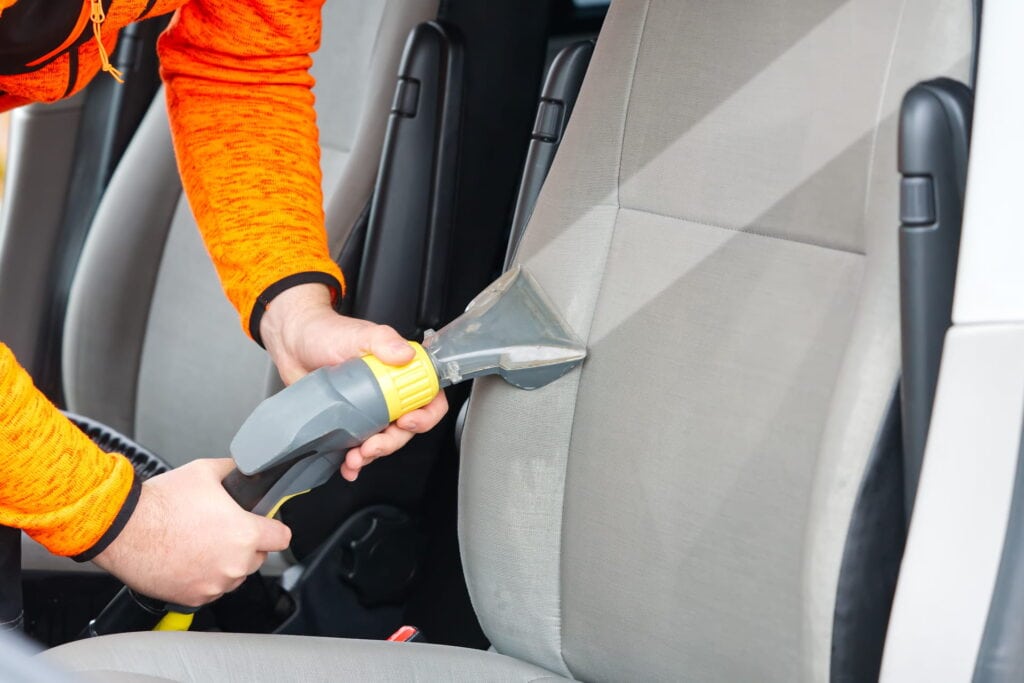
Steam cleaning is one of the most reliable ways to sanitize auto upholstery. High heat kills bacteria and loosens any residue that may have penetrated deep into the seat foam. Consumer Product Safety Commission studies confirm that steam cleaning can effectively reduce germs on porous surfaces. Portable steamers can be used at home, but heavily soiled seats may require professional equipment for complete odor removal.
- Steam sanitizes fabrics with heat
- Heat loosens stubborn residues
- Professional equipment may be needed for severe cases
Protecting Car Upholstery After Cleaning
Preventing future stains keeps auto upholstery in better condition for longer. Protective sprays form a barrier that reduces how much liquid penetrates fabric surfaces. Regular vacuuming removes dust and dirt, which helps maintain the cleanliness of seats. National Highway Traffic Safety Administration studies show that maintaining clean interiors also improves air quality inside vehicles, reducing allergens and bacteria.
- Protective sprays help resist liquid stains
- Vacuuming prevents buildup of dust and dirt
- Clean interiors improve vehicle air quality
Professional Help for Auto Upholstery
There are times when do-it-yourself cleaning is not enough, especially if urine has soaked deep into the foam padding. Professional car upholstery cleaners use advanced equipment and specialized solutions that go beyond household methods. Costs vary but are often worth it to restore seats fully. Experience from industry professionals shows that heavily contaminated auto upholstery benefits from professional restoration rather than repeated home treatments.
- Professionals offer deeper cleaning solutions
- Advanced equipment restores heavily damaged seats
- Professional help saves time in severe cases
Fresh Upholstery Care for Cars
Cleaning urine from car upholstery requires fast action, the right cleaning solutions, and sometimes professional help. Enzyme-based products, vinegar, baking soda, and steam cleaning each play a role in making auto upholstery fresh again. Protecting seats afterward with sprays and consistent maintenance prevents recurring problems. Car upholstery and auto upholstery are investments that stay in better condition when stains are treated properly and preventive care is taken seriously.
Key Takeaways on Cleaning Car Upholstery
- Quick blotting prevents urine from sinking deeper
- Enzyme cleaners are most effective for urine stains
- Odor neutralizers like baking soda provide lasting freshness
- Steam cleaning sanitizes fabric and kills bacteria
- Protective sprays and regular upkeep keep seats cleaner
Frequently Asked Questions About Cleaning Car Upholstery
What is the best household solution for urine on car upholstery?
A mix of vinegar and water helps neutralize uric acid while baking soda absorbs odors, making it a reliable first step before deeper cleaning.
Can steam cleaning remove all urine odors from auto upholstery?
Steam cleaning removes most bacteria and odor-causing particles, but if urine has soaked deeply into foam padding, multiple treatments or professional help may be necessary.
How long should baking soda sit on car upholstery?
Baking soda should remain on the fabric for at least eight hours, ideally overnight, to absorb trapped odors before being vacuumed away.
Are enzyme cleaners safe for all car upholstery fabrics?
Most enzyme cleaners are safe, but always test on a small hidden area first to ensure no discoloration occurs, especially with delicate fabrics.
When should professional auto upholstery cleaning be considered?
Professional help is recommended when odors persist despite home cleaning efforts or when stains have penetrated deep into the seat foam.